
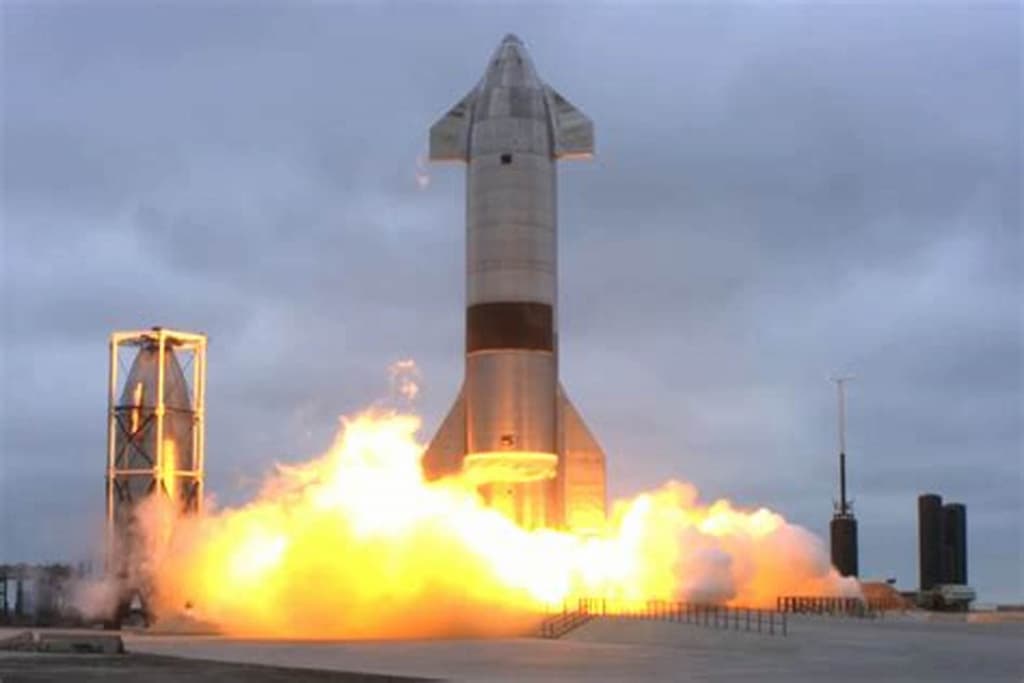
**SpaceX Starship V3 remains in an early testing phase with limited operational cadence, keeping the market heavily skewed toward fewer than five total launches reaching space in 2026.** As of late August, only two integrated flights have occurred this year—Flight 12 on May 22 and Flight 13 on July 24—both using the new Block 3/V3 configuration from a single Starbase pad. Flight 13 achieved a soft Indian Ocean splashdown and deployed early Starlink V3 simulators, yet full orbital insertion, booster catch attempts, and propellant transfer demos are still pending. Flight 14 is targeted for September at the earliest, with subsequent tests focused on reaching low Earth orbit and incremental milestones rather than rapid iteration. Historical patterns show months-long gaps between flights while addressing engine performance, structural loads, and regulatory approvals. With roughly four months remaining and only one active orbital launch mount, traders see significant barriers to scaling beyond a handful of attempts, even as SpaceX advances toward Starlink deployment and lunar objectives.
Experimental AI-generated summary referencing Polymarket data. This is not trading advice and plays no role in how this market resolves. · UpdatedHow many SpaceX Starship launches reach space in 2026?
How many SpaceX Starship launches reach space in 2026?
<5 64%
5-6 28%
7-8 2.7%
11-12 <1%
$502,646 Vol.
$502,646 Vol.
<5
64%
5-6
28%
7-8
3%
9-10
<1%
11-12
<1%
13-14
<1%
15-16
<1%
>16
<1%
<5 64%
5-6 28%
7-8 2.7%
11-12 <1%
$502,646 Vol.
$502,646 Vol.
<5
64%
5-6
28%
7-8
3%
9-10
<1%
11-12
<1%
13-14
<1%
15-16
<1%
>16
<1%
A successful launch is defined as the Starship taking off from its launchpad and reaching a minimum altitude of 62 miles above sea level. Any subsequent anomaly (e.g., an explosion) after the vehicle reaches 62 miles will have no bearing on the outcome.
The primary resolution source for this market will be SpaceX’s official video feed of the launches (e.g., via SpaceX YouTube Channel), as well as secondary video feeds or written reports if necessary. However, a consensus of credible reporting may also be used.
Market Opened: Dec 11, 2025, 7:39 PM ET
Resolver
0x2F5e3684c...A successful launch is defined as the Starship taking off from its launchpad and reaching a minimum altitude of 62 miles above sea level. Any subsequent anomaly (e.g., an explosion) after the vehicle reaches 62 miles will have no bearing on the outcome.
The primary resolution source for this market will be SpaceX’s official video feed of the launches (e.g., via SpaceX YouTube Channel), as well as secondary video feeds or written reports if necessary. However, a consensus of credible reporting may also be used.
Resolver
0x2F5e3684c...**SpaceX Starship V3 remains in an early testing phase with limited operational cadence, keeping the market heavily skewed toward fewer than five total launches reaching space in 2026.** As of late August, only two integrated flights have occurred this year—Flight 12 on May 22 and Flight 13 on July 24—both using the new Block 3/V3 configuration from a single Starbase pad. Flight 13 achieved a soft Indian Ocean splashdown and deployed early Starlink V3 simulators, yet full orbital insertion, booster catch attempts, and propellant transfer demos are still pending. Flight 14 is targeted for September at the earliest, with subsequent tests focused on reaching low Earth orbit and incremental milestones rather than rapid iteration. Historical patterns show months-long gaps between flights while addressing engine performance, structural loads, and regulatory approvals. With roughly four months remaining and only one active orbital launch mount, traders see significant barriers to scaling beyond a handful of attempts, even as SpaceX advances toward Starlink deployment and lunar objectives.
Experimental AI-generated summary referencing Polymarket data. This is not trading advice and plays no role in how this market resolves. · Updated

Beware of external links.
Beware of external links.
Frequently Asked Questions