
Multiple companies are accelerating orbital AI infrastructure to bypass terrestrial power, land, and water constraints limiting large language model training and inference. SpaceX detailed its AI1 compute satellite in June 2026, outlining solar arrays, radiative cooling, and plans for up to one million units, while filing FCC paperwork for massive constellations. Starcloud, NVIDIA-backed, achieved the first in-orbit LLM training on an H100-class system in late 2025, and Axiom Space deployed the initial dedicated orbital data center nodes to low Earth orbit in January 2026. Google’s Project Suncatcher targets prototype TPUs in 2027, alongside filings from Orbital and others. Key upcoming catalysts include Starship-enabled volume production, additional FCC approvals, and potential hyperscaler partnerships that could shift timelines and implied probabilities for operational space-based AI data centers.
Experimental AI-generated summary referencing Polymarket data. This is not trading advice and plays no role in how this market resolves. · Updated$35,394 Vol.
December 31, 2026
2%
December 31, 2027
25%
$35,394 Vol.
December 31, 2026
2%
December 31, 2027
25%
“Orbital data center” refers to any spacecraft, satellite, or equivalent technology carrying computing infrastructure that is launched into Earth’s orbit for the purpose of providing data-center, cloud-computing, or artificial intelligence computing services and which includes at least 100 data-center-grade AI accelerators, GPUs, TPUs, or substantially equivalent compute processors, (e.g. NVIDIA H100 GPUs, Google TPUs, or equivalent or successor chips).
“Successfully launched” refers to any launch which successfully places a qualifying orbital data center into Earth’s orbit.
The primary resolution source for this market will be a consensus of credible reporting.
Market Opened: May 14, 2026, 1:45 PM ET
Resolver
0x65070BE91...“Orbital data center” refers to any spacecraft, satellite, or equivalent technology carrying computing infrastructure that is launched into Earth’s orbit for the purpose of providing data-center, cloud-computing, or artificial intelligence computing services and which includes at least 100 data-center-grade AI accelerators, GPUs, TPUs, or substantially equivalent compute processors, (e.g. NVIDIA H100 GPUs, Google TPUs, or equivalent or successor chips).
“Successfully launched” refers to any launch which successfully places a qualifying orbital data center into Earth’s orbit.
The primary resolution source for this market will be a consensus of credible reporting.
Resolver
0x65070BE91...Multiple companies are accelerating orbital AI infrastructure to bypass terrestrial power, land, and water constraints limiting large language model training and inference. SpaceX detailed its AI1 compute satellite in June 2026, outlining solar arrays, radiative cooling, and plans for up to one million units, while filing FCC paperwork for massive constellations. Starcloud, NVIDIA-backed, achieved the first in-orbit LLM training on an H100-class system in late 2025, and Axiom Space deployed the initial dedicated orbital data center nodes to low Earth orbit in January 2026. Google’s Project Suncatcher targets prototype TPUs in 2027, alongside filings from Orbital and others. Key upcoming catalysts include Starship-enabled volume production, additional FCC approvals, and potential hyperscaler partnerships that could shift timelines and implied probabilities for operational space-based AI data centers.
Experimental AI-generated summary referencing Polymarket data. This is not trading advice and plays no role in how this market resolves. · Updated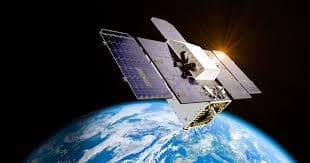
Beware of external links.
Beware of external links.
Frequently Asked Questions