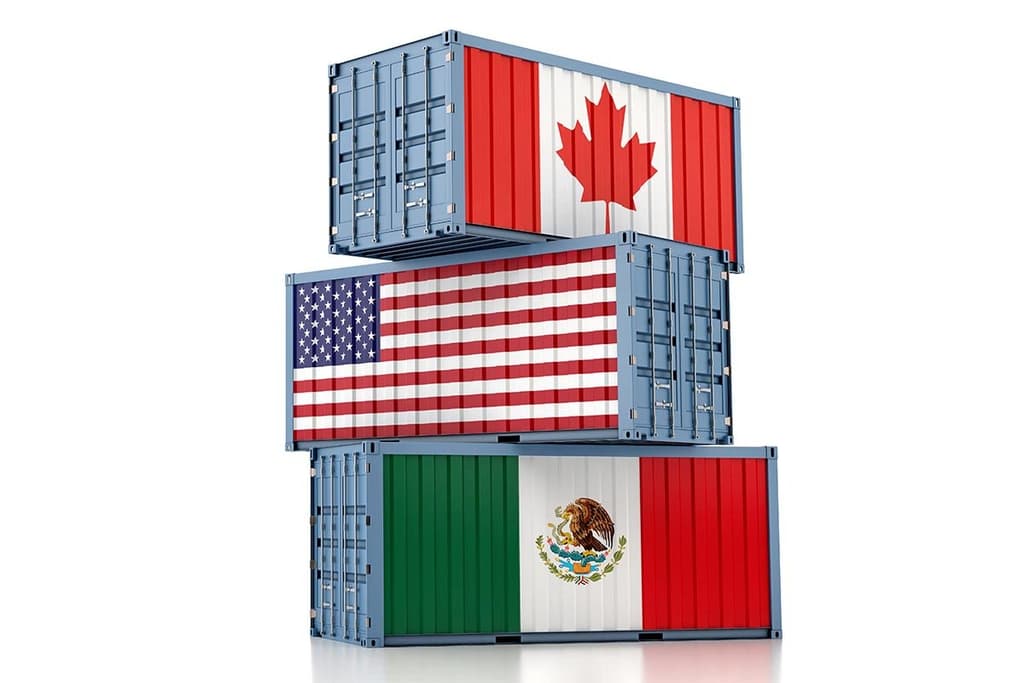
**The US decision on July 1, 2026, during the mandatory six-year USMCA joint review under Article 34.7, is the primary driver of trader sentiment.** USTR Ambassador Jamieson Greer stated that the United States “did not agree to renew the USMCA in its current form,” while Mexico and Canada supported a 16-year extension. This triggered the annual review cycle instead, with the agreement remaining in force through its 2036 termination date unless all parties later confirm an extension via heads-of-government written agreement. Ongoing bilateral talks—such as the U.S.-Mexico rounds scheduled around July 20—focus on issues including rules of origin, automotive content, Chinese transshipment, tariffs on steel/aluminum and autos, and enforcement. However, the Trump administration has signaled preference for separate bilateral arrangements over trilateral renewal in the existing structure. With the July 1 deadline passed and no consensus on immediate extension, markets price the low likelihood of a 2026 renewal at 87% for “No,” reflecting the explicit U.S. position and the shift to protracted annual reviews.
Experimental AI-generated summary referencing Polymarket data. This is not trading advice and plays no role in how this market resolves. · Updated$10,364 Vol.
$10,364 Vol.
$10,364 Vol.
$10,364 Vol.
A qualifying extension requires all three parties to formally extend the term of the agreement. This may occur through written confirmation of their wish to extend the term for a further period pursuant to USMCA Article 34.7, or through other formal means that clearly and definitively extend the term, such as a unanimous amendment of the agreement. An extension qualifies whether or not it also includes negotiated modifications to the original agreement.
The following will not qualify: announcements unaccompanied by a formal extension; extension of individual provisions that does not extend the agreement's term itself; commitments to extend by fewer than all three parties; and replacement of the USMCA with a separate or successor agreement, as opposed to continuation of the existing agreement.
The primary resolution source is official information from the United States, Canada, and Mexico; however, a consensus of credible reporting may also be used.
Market Opened: Jul 1, 2026, 5:35 PM ET
Resolver
0x65070BE91...A qualifying extension requires all three parties to formally extend the term of the agreement. This may occur through written confirmation of their wish to extend the term for a further period pursuant to USMCA Article 34.7, or through other formal means that clearly and definitively extend the term, such as a unanimous amendment of the agreement. An extension qualifies whether or not it also includes negotiated modifications to the original agreement.
The following will not qualify: announcements unaccompanied by a formal extension; extension of individual provisions that does not extend the agreement's term itself; commitments to extend by fewer than all three parties; and replacement of the USMCA with a separate or successor agreement, as opposed to continuation of the existing agreement.
The primary resolution source is official information from the United States, Canada, and Mexico; however, a consensus of credible reporting may also be used.
Resolver
0x65070BE91...**The US decision on July 1, 2026, during the mandatory six-year USMCA joint review under Article 34.7, is the primary driver of trader sentiment.** USTR Ambassador Jamieson Greer stated that the United States “did not agree to renew the USMCA in its current form,” while Mexico and Canada supported a 16-year extension. This triggered the annual review cycle instead, with the agreement remaining in force through its 2036 termination date unless all parties later confirm an extension via heads-of-government written agreement. Ongoing bilateral talks—such as the U.S.-Mexico rounds scheduled around July 20—focus on issues including rules of origin, automotive content, Chinese transshipment, tariffs on steel/aluminum and autos, and enforcement. However, the Trump administration has signaled preference for separate bilateral arrangements over trilateral renewal in the existing structure. With the July 1 deadline passed and no consensus on immediate extension, markets price the low likelihood of a 2026 renewal at 87% for “No,” reflecting the explicit U.S. position and the shift to protracted annual reviews.
Experimental AI-generated summary referencing Polymarket data. This is not trading advice and plays no role in how this market resolves. · Updated

Beware of external links.
Beware of external links.
Frequently Asked Questions