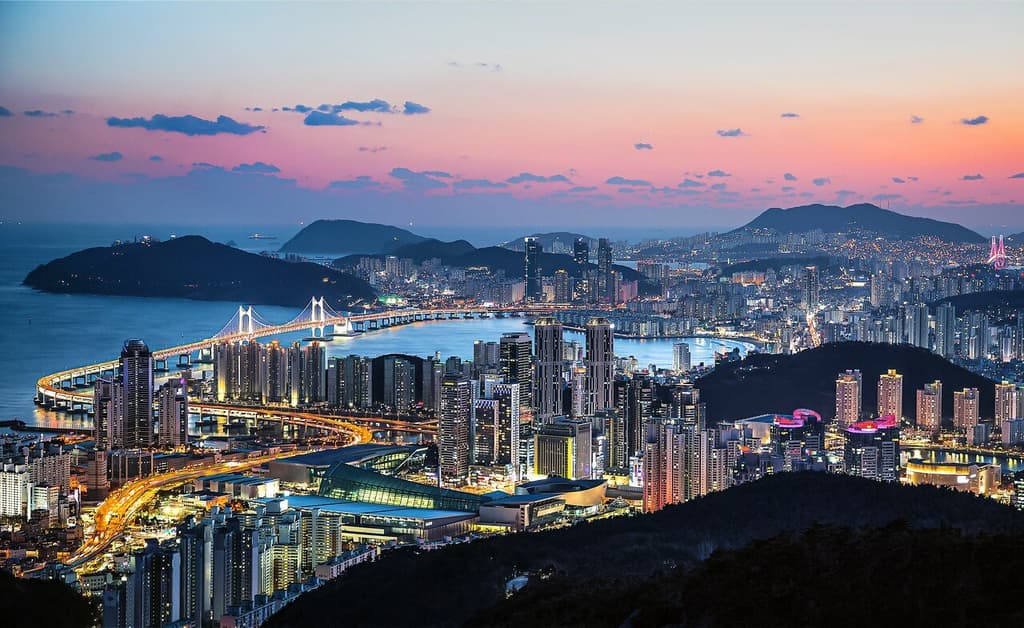
**Current short-term forecasts for Busan on August 29 indicate overnight lows near 24–26°C, with trader odds closely split between cooler and warmer extremes due to uncertainty in cloud cover, precipitation timing, and local wind patterns.** Coastal proximity to the East Sea enables sea breezes that typically moderate minimum temperatures by advecting cooler marine air, while high humidity (often 80%+) and potential thunderstorms reduce nocturnal radiative cooling. Recent model consensus from agencies like the Korea Meteorological Administration shows partly cloudy conditions with scattered showers, which could either suppress lows via trapped heat or enhance them through evaporative cooling and clearer skies post-rain. Historical August climatology places average lows around 23–24°C, but interannual variability from North Pacific high-pressure positioning introduces the observed market balance ahead of final observational data.
Experimental AI-generated summary referencing Polymarket data. This is not trading advice and plays no role in how this market resolves. · UpdatedLowest temperature in Busan on August 29?
Lowest temperature in Busan on August 29?
22°C or below 99%
32°C or higher 60%
25°C 50%
26°C 50%
22°C or below
99%
23°C
49%
24°C
49%
25°C
50%
26°C
50%
27°C
49%
28°C
49%
29°C
49%
30°C
2%
31°C
8%
32°C or higher
60%
22°C or below 99%
32°C or higher 60%
25°C 50%
26°C 50%
22°C or below
99%
23°C
49%
24°C
49%
25°C
50%
26°C
50%
27°C
49%
28°C
49%
29°C
49%
30°C
2%
31°C
8%
32°C or higher
60%
The resolution source for this market will be information from NOAA, specifically the lowest reading under the "Temp" column for all times on this day, available here: https://www.weather.gov/wrh/timeseries?site=rkpk
If NOAA data is unavailable or missing for the observation period, Weather Underground will be used as the secondary resolution source.
To toggle between Fahrenheit and Celsius, click the "Switch to Metric Units" button until the relevant table displays °C.
This market can not resolve until the first data point for the following date has been published on the resolution source.
The resolution source for this market measures temperatures to whole degrees Celsius (eg, 9°C). Thus, this is the level of precision that will be used when resolving the market.
Revisions to temperatures recorded within this market's timeframe will be considered until the first datapoint for the following date has been published, after which any alterations will not be considered.
Market Opened: Aug 27, 2026, 12:31 AM ET
Resolution Source
https://www.weather.gov/wrh/timeseries?site=rkpkResolver
0x69c47De9D...The resolution source for this market will be information from NOAA, specifically the lowest reading under the "Temp" column for all times on this day, available here: https://www.weather.gov/wrh/timeseries?site=rkpk
If NOAA data is unavailable or missing for the observation period, Weather Underground will be used as the secondary resolution source.
To toggle between Fahrenheit and Celsius, click the "Switch to Metric Units" button until the relevant table displays °C.
This market can not resolve until the first data point for the following date has been published on the resolution source.
The resolution source for this market measures temperatures to whole degrees Celsius (eg, 9°C). Thus, this is the level of precision that will be used when resolving the market.
Revisions to temperatures recorded within this market's timeframe will be considered until the first datapoint for the following date has been published, after which any alterations will not be considered.
Resolution Source
https://www.weather.gov/wrh/timeseries?site=rkpkResolver
0x69c47De9D...**Current short-term forecasts for Busan on August 29 indicate overnight lows near 24–26°C, with trader odds closely split between cooler and warmer extremes due to uncertainty in cloud cover, precipitation timing, and local wind patterns.** Coastal proximity to the East Sea enables sea breezes that typically moderate minimum temperatures by advecting cooler marine air, while high humidity (often 80%+) and potential thunderstorms reduce nocturnal radiative cooling. Recent model consensus from agencies like the Korea Meteorological Administration shows partly cloudy conditions with scattered showers, which could either suppress lows via trapped heat or enhance them through evaporative cooling and clearer skies post-rain. Historical August climatology places average lows around 23–24°C, but interannual variability from North Pacific high-pressure positioning introduces the observed market balance ahead of final observational data.
Experimental AI-generated summary referencing Polymarket data. This is not trading advice and plays no role in how this market resolves. · Updated
Beware of external links.
Beware of external links.
Frequently Asked Questions